I have a problem with Bing. Here's Google's search results for "bennegan"
And how does Bing do?
I'm number 2 (and 3) on Google and Microsoft has never heard of me. Bullocks.
Sunday, June 21, 2009
Bing Sucks

Why GM Matters by William J. Holstein
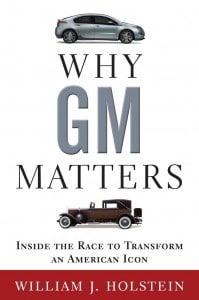
Published earlier this year, Bill Holstein's book about GM and the auto industry is timely. It was finished around the time that the CEOs of the Big Three went to Washington on private planes to ask for a bailout. I was hoping for a book that was 50% GM biography and 50% argument for a domestic auto industry. The book he wrote is 95% biography and 5% argument for an American industry. He didn't put a lot of thought into the argument part of the book either. Why should we keep GM around? Because the auto companies have done a lot of great things for our country (see the Ford and Alfred P. Sloan Foundations), GM's factories helped us win World War II, there are a ton of jobs at stake, and we as a nation benefit from the skills we develop in running an auto industry. That's all Bill Holstein mentioned, to be the best of my memory. SO weak.
This book is an argument in favor of GM. So why would Mr. Holstein cite the Ford Foundation as a charitable organization? And if the only charitable organization coming out of GM in the past 100 years is the Alfred P. Sloan foundation, I'd say GM is doing the bare minimum to get by. Plus, it's the Sloan foundation, not the GM foundation. Alfred Sloan could have made his money elsewhere and still been as charitable as he was. Plus, it seems that Mr. Holstein is forgetting that we have more than one auto company. He made it sound like the failure of GM means the failure of our whole auto industry. Things would get pretty bad for the industry if GM failed, but in 50 years, who's to say Ford, Chrysler, Tesla Motors and a host of new auto companies wouldn't fill the void? Creative destruction. That concept is absent from this book. Lastly, how do we compare all of the benefits from running GM against the pollution generated by its inefficiency? Is the Alfred P. Sloan foundation and all the rest of it more valuable than an extra 10 miles per gallon on every car? When we have 500 million refugees in Asia in the next 50 years thanks to rising sea levels and a lack of potable water, are we going to be talking about how great the Sloan Foundation was, or how it was a shame we didn't pollute less in the past 200 years? All of that aside, GM has been doing a great job catching up to its foreign competition, despite what you hear in the media. Toyota brought its first car, the "Toyopet," into the US in 1967 (pictured here). It was laughed right back to Japan. They tried again in 1969 and in just two years had dramatically improved upon their shortcomings. By the 1980s, Toyota had caught right up to Detroit in terms of quality. What spelled trouble for Detroit was what GM discovered when it created a co-venture with Toyota, called the NUMMI, in 1984. That was GM's first look at how Toyota produced its cars. It was also Toyota's first factory in the US. What GM discovered was that Toyota could make a comparable car to what GM was producing in half the time. Since that moment, GM, Ford, and Chrysler have been playing catch up.
GM has, as of the book's publication, cut its deficit to 5%. Now GM charges (I can't remember the exact figure) an extra $400 per car due to its inefficiencies vis-a-vis Toyota. That 5% figure however, is what you get by comparing GM's American factories to Toyota's American factories. Apparently, the factories that Toyota runs in Japan are far, far more efficient (thanks to all the robots?). But GM has some tricks up its sleeve. Most people who work at GM think they have a design edge. American cars, when designed right, are better than Toyota's. 
Ummmm... there was a lot in the book that I'm leaving out. I guess I'll wrap it up anyway. This is longer than I had envisioned. Hope it gets the traffic that my World War IV post still gets.
Saturday, June 20, 2009
The Egan Fund
I just set up another blog. I'm going to dump my portfolio updates and posts about investing in there. I'll keep this blog for personal stuff and book reviews.
I added a link to the new blog in my sidebar. In the Friends (now "Friends & Other Projects") section.
Friday, June 19, 2009
Portfolio Update 06.19.2009

I took a hit along with the rest of the market this week. The Dow Jones fell 2.13% on Monday, 1.25% on Tuesday, 0.09% on Wednesday and 0.19% on Friday. It was up slightly on Thursday, but the week ended 260 points lower than it opened. That might not seem like a lot, but it is. I hemorrhaged money until Thursday. I rebounded a bit, even making money on Friday while the market was down.
I dramatically changed my portfolio on Wednesday. I think it was emotional buying (I lost $235.19, $45.32, and $217.92 in the first three days of the week), but I got rid of everything but my AgFeed and Bank of America. I was down quite a bit on my MGM Mirage, but everything else was either slightly higher or lower than when I bought it. I think I made money overall, but I consider it a wash (even after trading fees). AgFeed fell more than I ever imagined it could, so after freeing up $2400 in cash, I moved another $900 into AgFeed at the depressed price. My average cost is now $4.98 a share and it closed at $6.24 on Friday.
This bull market might be retreating, so I'm keeping $1,500 in cash right now. I'm going to wait and see what the market does.
[[[Holdings: 20 BAC; 315 FEED]]]
Friday, June 12, 2009
Portfolio Update 06.12.2009

The major American indeces were flat for the week (06.08-06.12) and so was I. The Dow Jones just turned positive for the year which the personalities on CNBC were excited about. Big deal. Mumbai and Shanghai are up more than 50% over the same period, and Hong Kong is up 31% since January 1st.
Over the same period that the Dow Jones managed to break even, I'm up 45.6%. Eat it.
[[[Holdings: 15 X; 25 BWP; 20 BAC; 35 MGM; 28 DPS; 400 EVC; 1150 LBIX; 165 FEED]]]
Friday, June 05, 2009
Portfolio Update 06.05.2009
I'm up almost 33% since October 1, 2008.
AgFeed was a great idea. I'm up 66% since I bought it on the 12th. Pork prices have bottomed in China, so even if these shares hit a rough patch, I think they have farther to go.
I'm going to sell my shares of Dr. Pepper when they approach $24. That was Goldman Sachs' price target when I bought them.
I told Daniela that I was going to move a bunch of money into Entravision (EVC) when we see Chrysler and GM ads on TV again. Advertising from auto companies makes up 20% of EVC's ad dollars. So when both of those firms begin spending on advertising again, I'm going to reshuffle my portfolio.
Monday, June 01, 2009
My First Week: A Play
--- Characters ---
Benn -- a new hire
Jane -- a senior employee who has the regrettable job of training the new guy
Scene I: A cubicle in Boston
Benn: "Hey, Jane, do you have a minute?"
Jane: "Sure, what's up?"
Benn: "Well, I have this activity in the B of A account that I don't understand"
Jane: "OK, well let's walk over to your desk and you can show me"
The dashing new hire leads Jane to his desk. He mistakes a co-worker's cubicle for his own, but eventually gets the right one.
Benn: "See this 1,500 bucks? I can't match this with anything"
Jane: "OK, what's the account number?"
Benn: "..."
Jane: "This first number is the account number"
Benn: "Oh, right, right, right, right. The account number is 001 002 003"
Jane: "OK, so let's look it up in FBSI"
Benn: "Ummm... I don't see anything on my desktop that says fibbsy"
Jane: "Log in to the mainframe"
Benn: "Oh yeah, I knew that. OK. I'm logged in.... now I push...."
Jane: "2 for FBSI. Do you see how it says FBSI right here?"
Benn: "Oh, right, right, right. Of course. FBSI. Right there. 2."
Jane: "..."
Benn: "..."
Jane: "..."
Benn: "...ummmm"
Jane: "OK, so type 'bhis' right here and the account number right here."
Benn: "How do I know the account number?"
Jane: "Because we just looked it up. Did you write it down?"
Benn: "No"
Jane: "OK, so let's go back to Recon and find the entry again."
Benn: "What's a recon?"
Sunday, May 31, 2009
Portfolio Update 05.31.2009
I took a little spill along with the rest of the market on the 13th. I've since rebounded. I bought 165 shares of AgFeed on the 12th for about $4.50 a share. On the previous day, I bought 25 shares of Boardwalk Pipeline Partners and on the day before that, I sold all of my Freddie Mac holdings at a significant loss. I'm up 18.67% since October 1st.
Saturday, May 30, 2009
AgFeed Industries, Inc.

So, Agfeed has two market segments. They produce premix feed for pigs (farmers combine premix and different sources of protein to feed their pigs with) and sell it in independently-owned chain stores (pictured below) and directly to larger commercial farmers. As of December 31, 2008 they had 1,000 chain stores (which sell to small, backyard operations) and 660 commercial farm customers.
The feed business has been good (prices are currently high), but they've recently expanded into hog farming. AgFeed wants to raise 2,000,000 pigs in 2010, and they are now the largest producer (with less than 0.3% market share!) in a country that consumes 600,000,000 pigs a year. So, the market in China is very, very fragmented. I think China is going to move toward larger, consolidated producers like those that exist in the West. One reason is that larger farms are more efficient and in order to feed a rising China, increasing output will be essential. Another reason is that with the passage of China's new Food Safety Law (it comes into effect June 1, 2009) unsafe backyard operations could be shut down (assuming Chinese authorities don't use the law to drive foreign firms like AgFeed out of business). China's recent food scares (melamine in baby formula, etc;) have caused consumers to trust backyard production less. Just like in the West now, Chinese consumers will need brand names they can trust. As AgFeed is already a large producer with brand names, it seems like they're poised to do quite well.
AgFeed's financial statements look good too, but don't take my word for it. Here is their 2008 annual report.
China will demand more meat as it becomes wealthier (pork makes up 65% of the meat consumed), so even in a market 6x larger than in the US, it can only go up from here. Hog prices have appeared to bottom recently, which is also great for AgFeed. Growth is what makes me want to get on board though. And the fact that AgFeed is trading at $6, from a high of $19, and its revenue growth is monstrous.

Thursday, May 28, 2009
Innovation Nation by John Kao

The book's full title says it all: Innovation Nation: How America is Losing Its Innovation Edge, Why It Matters, and What We Can Do to Get It Back. If you already think America's best days are behind it and it's going to get eaten alive by Finland (#1 in global competitiveness according to the World Economic Forum in 2005), then you're going to love this book. If you read that expanded title and say, "OK, prove it to me" then you're going to hate this book. I'm in the latter camp.
What Thomas Friedman did for globalization, John Kao is trying to do for innovation. And I detect much of Mr. Friedman's writing in this book. Subheadings for the chapter "The New Geography of Innovation" include "Silicon Valley is now everywhere," "Talent is now everywhere," "Capital is now everywhere," and the verbose "Government investment in military and aerospace is now everywhere." Kao even calls the current period of innovation "Version 4.0" to distinguish it from earlier ones. And like all of Mr. Friedman's books, this one is heavy on anecdotes and statistics, but light on structure and predictive models (it also cherry picks history).
In addition to graduating from Harvard, teaching at MIT, and starting several companies, John Kao is "a leading expert on innovation" according to the book jacket. The leading expert on innovation defines his own specialization as "the ability of individuals, companies, and entire nations to continuously create their desired future." I guess having terminal cancer isn't very "innovative." He also says that innovation isn't all about science and technology. Grameen Bank, Southwest Airlines, American Apparel, the index fund, and W Hotels are all examples of innovation. Now, here's where I began to have a problem. Kao demands that we be exact when talking about innovation, because innovation is not a vague concept like love, but something that we can measure and actively promote. So, how then? How do we measure innovation? He dangles the idea of measuring innovation in front of the reader, offers some suggestions (the number of PhDs or patents), but then disappears into his next thought. He asks us to take innovation as seriously as accounting, but even a "leading expert" has no real idea of what that means.
So, if America is losing its innovative edge, who does Kao want to get gay with? Singa-bore, Finland, Denmark, Ireland, and a few other places. Why does he want to get gay with those countries? Because Singapore just built a giant mall and it successfully got the Culinary Institute of America to open a school there. The mall I'm referring to is One North. It's an international research and development center created by Singapore to mimic the successes of Silicon Valley. Many of the world's leading tech companies, venture capitalists, and universities are opening branches there to take part in this collaborative, scientific community. Kao says that many parts of the world are engaging in these efforts, and without similar initiatives here, we're going to fall behind the rest of the world in cultivating innovation (and with innovation, economic and scientific success).
I want to shout 'bullshit' from a mountaintop. Singapore is luring venture capitalists, biotech firms, and universities to the same location with the goal of creating Silicon Valley. Why does that sound so familiar... oh yeah, the Arabs just 
Innovation is very important. I'm not saying that it isn't. I'm saying that this book is crap. Government support, a good school system, and all the rest of it are essential, but I think John Kao isn't thinking hard enough about this. As part of his argument, America became mighty by introducing the GI Bill after World War II, allowing a whole generation of Americans to go to college. OK. But we were able to defeat the Germans AND the Japanese without a GI Bill. America's innovation and success didn't begin when John Kao needs it to. It began way before then, when America wasn't doing many of the things that he claims are now essential. I think Mr. Kao needs to go back to the drawing board and come up with a new theory on innovation. But, if in 10 years the best universities are located in Singapore, Finland, and Denmark, I'll take it all back.
Technorati tags: John, Kao, Innovation, Nation, Singapore, Dubai
Saturday, May 23, 2009
Thursday, May 21, 2009
T. Boone Pickens, I'm On Board
While still at Investors Bank & Trust, I remember being horrified by the reading choices of my superiors. A director was reading Cod: A Biography of the Fish that Changed the World, my manager was reading Jack Welch's Winning, and one of the senior fund accountants was reading some crap about being successful in business and the greatness of America. I felt superior to every one of them with a Dostoevsky novel tucked under my arm. And now what am I reading? The First Billion is the Hardest by T. Boone Pickens. I am filled with self-loathing. Only not.
So, I wouldn't recommend the book. It's mostly a biography, and not a particularly interesting one at that (not that Mr. Pickens didn't have a great life -- except for that period where he had a messy divorce, lost some of his friends, was forced out of his company and severely depressed). I picked it up because I wanted information about his energy plan, and that is withheld until the final chapter of the book. Visit the PickensPlan website instead. Or just watch the video that I included beneath this post.
Tuesday, May 19, 2009
Monday, May 18, 2009
Daniela's Birthday BBQ
 I had some of our friends over on Saturday and threw Daniela a surprise birthday BBQ. I told her to keep the 16th free, but didn't tell her what we were doing. When she aggressively tries to figure out what the surprise is, she almost always gets it. I either smile or blush uncontrollably when she gets close. So she was much better this time about allowing it to be a surprise.
I got a pony keg of Harpoon Summer Ale and made some food. I asked everyone who was coming to bring something as well. I was nervous about not having enough to eat and drink but we did pretty well. And we scored a bottle of Shiraz and a bottle of Pinot Grigio out of it. Oh, and 6 pounds of ground beef that we didn't need.
I planned on keeping the BBQ a secret until the morning of the party. I had asked our friend Lou to help me get the food and drinks around 11:30 so until that moment it could be kept from her, but not afterward. Then, on Friday, D asked if she could go with our neighbor upstairs, Vanessa, to the gym at 11. I told her that wouldn't interfere with our plans (BBQ started at 3) and that allowed me to take off secretly with Lou to get the food. Lou and I got back after 1 and by then D had already come home. So I kept it a secret until 2 hours before the party, when I started to make the burgers. I had never put so much junk into hamburger patties before. I found a bunch of recipes online and they all called for essentially the same ingredients. So I put chili powder, BBQ sauce, 2 eggs, garlic salt, pepper, Italian-style bread crumbs, and half an onion into 5 1/2 lbs. of ground beef. I didn't measure anything and I don't think you need to. Just wing it. Everyone (who wasn't a vegetarian) said they were awesome, so I would highly recommend doing the same.
We all just crammed onto our back deck and it seemed like it was OK, despite not really having enough chairs or space to put them in. Vanessa made Oreo balls (I don't think the link I provided is the actual recipe that she used, but you'll get the idea) and an Eclair birthday cake.
Our friends Jared, Laurie, and John stuck around after everyone else had left, so we sat on the deck talking until around 9:30.
D's actual birthday is this Wednesday so we'll go out to dinner and maybe do something else. I'm not really sure yet since I spent the past two weeks planning this party and not the next one.
Thanks to everyone who made it!
Friday, May 15, 2009
Sarkozy Called It
From an April 17th article in the London Times:
"Mr Sarkozy was quoted yesterday as telling an all-party group of MPs that Mr Obama was inexperienced and indecisive. 'Obama has a subtle mind, very clever and very charismatic,' the French President said. 'But he was elected two months ago and had never run a ministry. There are a certain number of things on which he has no position. And he is not always up to standard on decision-making and efficiency.'”The article's summary has Sarkozy calling Barack Obama a "weak" president. My only problem with that statement is that weak is a relative term, and I'd like to know who is and isn't weak in Mr. Sarkozy's mind.
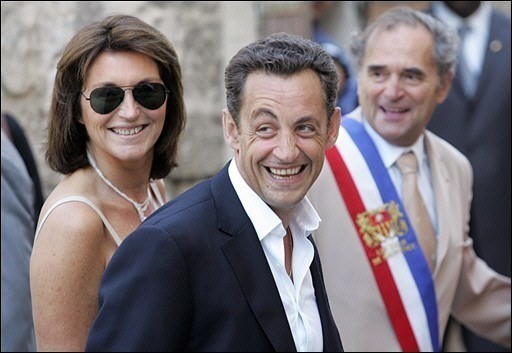 But I'm beginning to think Barack Obama is a weak president. President Obama isn't going to fight the military over Lt. Dan Choi's dismissal, despite having said "'Don't Ask, Don't Tell' makes no sense. Why would we not want able men and women, who are willing to sacrifice on our behalf, why would we tell them 'no'?" as a presidential candidate. He also reversed his decision to release more Abu Ghraib photos after General Odierno intervened and convinced him otherwise. The president declared fair trials for everyone being held at Guantanamo, but now it looks like military tribunals are back.
Barack Obama watered down his stimulus bill to get Republicans on board (which they didn't do) and, despite his real commitment to fighting global warming, his cap-and-trade proposal doesn't go as far as the Europeans have already gone. Unlike when George W. Bush was president, I agree with the White House's agenda, so I wouldn't mind seeing it shoved down a few throats. How about a little less 'uniter' and a little bit more 'decider?'
I eagerly await the outcome of his health care reforms.
Monday, May 11, 2009
LBIX, EVC, and BWP
 I'm almost finished re-balancing my portfolio. I sold my 250 shares of Freddie Mac (FRE) this morning at a 56% loss. They can't all be winners I guess. At least my Freddie losses will help reduce my capital gains taxes at year end (I'm on the hook for realized profits of $1,200 so far).
I bought 1,150 shares of a small bottling company in western Canada (mentioned in an earlier post). Last week I also bought 400 shares of a Spanish-language media company. The company is Entravision Communications (EVC) and it operates TV and radio stations all over the country (its stations are Univision and TeleFutura affiliates). I read their 10-K and listened to last quarter's conference call. I'm sold on the growth potential. Hispanics in this country are on the move and someone's gotta advertise to them. With the economy where it is advertising revenues are waaay down, but I think Entravision will survive it and rebound nicely.
I bought 25 shares of Boardwalk Pipeline Partners (BWP). It's a company that owns and operates natural gas pipelines along the Gulf Coast and up to the Midwest. It's paying a 10% dividend and I don't think they're going to need to cut it. The company just discovered that there are some mechanical problems with its pipelines and they've been running less than optimally. After the problem is fixed, they 'll boost production with minimal extra cost. Plus, natural gas is going to be an important part of any future energy policy in this country.
The $770 I have left in cash is going into a tech or a Chinese ADR. I'm leaning toward AgFeed (FEED), the largest farmer of pigs in China and a major seller of feed.
My performance since October 1st, 2008 (I'm in blue and the Dow Jones is in red):
Monday, May 04, 2009
Some Mistakes, but Overall Pretty Good
Great start to the week. Las Vegas is surging. Ford rose another 40% after I sold it. I'm up 15% overall (about $450). I'm not sure where the market is headed so I'm holding $1,400 in cash. I replaced my Ford and Tata Motors with $530 worth of Dr. Pepper Snapple (NYSE: DPS) and 1,150 shares of Leading Brands (Nasdaq: LBIX). The Dr. Pepper play is already boring me. I'm up 8% and I couldn't care less. I'm very excited about Leading Brands though. Huge growth potential. It started as a bottling/co-packing/distribution company in western Canada. They made Hansen's Monster Energy Drink a huge success in Canada, only to be dropped for Pepsi. They're trying to build their own brands now and from what I gather online, they're doing pretty well. TrueBlue, Stoked, Trek, and Infinity are a few of their brands. Anyone have any feedback on how they are? The 7-11s and grocery stores near my house don't carry them.
Five Boro Bike Tour -- 05.03.2009
 What a great weekend. Daniela and I drove out to Greenfield on Friday (May 1st) for my sister's wedding. I'll post my pictures this week. My new brother-in-law is a great guy and I want to say congratulations again to the new Melnik family. I was also able to see my dad this weekend and play with his 6-week old Golden Retriever puppies.
First of all, it rained all day long. It was only a drizzle at 7am, but it was raining by the time we got to Brooklyn at 10:30 or 11. We agreed to meet up at the last rest stop before the VN Bridge, which Dave and I thought was one stop, but everyone else thought was another. Dave and I waited for 15 minutes and assumed someone had an accident. Neither of us had a cell phone (and we didn't know anyone's number), so Dave borrowed another rider's to call his wife Kelly back in Boston. She didn't answer, so he left her a message to call Bruce or Kevin and tell them we weren't waiting any longer (at the same time, those guys called my girlfriend in Boston with the same purpose). At that point we had been standing still in the rain for 15 minutes and had lost all of our body heat. My jaw and right leg wouldn't stop shaking. We continued on and eventually met up with everyone at the finish line.
I saw at least two accidents. An older woman tried to take her bike through an enormous puddle on the highway and her bike slid out from under her. On the VN Bridge, an older looking man was lying on the shoulder with at least 10 bikers and possibly some EMTs looking after him. I was nervous about riding in such a large group because I assumed accidents were common and I don't have health insurance. I worried too much I think. I saw several kids racing who couldn't have been older than 12. I don't know if they finished the race or not, but they were doing pretty well when I passed them. Two accidents out of thousands of racers isn't bad. I would love to do the race again, but hopefully in better weather next time.

Subscribe to:
Posts (Atom)
