Saturday, May 23, 2009
Thursday, May 21, 2009
T. Boone Pickens, I'm On Board
While still at Investors Bank & Trust, I remember being horrified by the reading choices of my superiors. A director was reading Cod: A Biography of the Fish that Changed the World, my manager was reading Jack Welch's Winning, and one of the senior fund accountants was reading some crap about being successful in business and the greatness of America. I felt superior to every one of them with a Dostoevsky novel tucked under my arm. And now what am I reading? The First Billion is the Hardest by T. Boone Pickens. I am filled with self-loathing. Only not.
So, I wouldn't recommend the book. It's mostly a biography, and not a particularly interesting one at that (not that Mr. Pickens didn't have a great life -- except for that period where he had a messy divorce, lost some of his friends, was forced out of his company and severely depressed). I picked it up because I wanted information about his energy plan, and that is withheld until the final chapter of the book. Visit the PickensPlan website instead. Or just watch the video that I included beneath this post.

Tuesday, May 19, 2009
Monday, May 18, 2009
Daniela's Birthday BBQ
 I had some of our friends over on Saturday and threw Daniela a surprise birthday BBQ. I told her to keep the 16th free, but didn't tell her what we were doing. When she aggressively tries to figure out what the surprise is, she almost always gets it. I either smile or blush uncontrollably when she gets close. So she was much better this time about allowing it to be a surprise.
I got a pony keg of Harpoon Summer Ale and made some food. I asked everyone who was coming to bring something as well. I was nervous about not having enough to eat and drink but we did pretty well. And we scored a bottle of Shiraz and a bottle of Pinot Grigio out of it. Oh, and 6 pounds of ground beef that we didn't need.
I planned on keeping the BBQ a secret until the morning of the party. I had asked our friend Lou to help me get the food and drinks around 11:30 so until that moment it could be kept from her, but not afterward. Then, on Friday, D asked if she could go with our neighbor upstairs, Vanessa, to the gym at 11. I told her that wouldn't interfere with our plans (BBQ started at 3) and that allowed me to take off secretly with Lou to get the food. Lou and I got back after 1 and by then D had already come home. So I kept it a secret until 2 hours before the party, when I started to make the burgers. I had never put so much junk into hamburger patties before. I found a bunch of recipes online and they all called for essentially the same ingredients. So I put chili powder, BBQ sauce, 2 eggs, garlic salt, pepper, Italian-style bread crumbs, and half an onion into 5 1/2 lbs. of ground beef. I didn't measure anything and I don't think you need to. Just wing it. Everyone (who wasn't a vegetarian) said they were awesome, so I would highly recommend doing the same.
We all just crammed onto our back deck and it seemed like it was OK, despite not really having enough chairs or space to put them in. Vanessa made Oreo balls (I don't think the link I provided is the actual recipe that she used, but you'll get the idea) and an Eclair birthday cake.
Our friends Jared, Laurie, and John stuck around after everyone else had left, so we sat on the deck talking until around 9:30.
D's actual birthday is this Wednesday so we'll go out to dinner and maybe do something else. I'm not really sure yet since I spent the past two weeks planning this party and not the next one.
Thanks to everyone who made it!
Friday, May 15, 2009
Sarkozy Called It
From an April 17th article in the London Times:
"Mr Sarkozy was quoted yesterday as telling an all-party group of MPs that Mr Obama was inexperienced and indecisive. 'Obama has a subtle mind, very clever and very charismatic,' the French President said. 'But he was elected two months ago and had never run a ministry. There are a certain number of things on which he has no position. And he is not always up to standard on decision-making and efficiency.'”The article's summary has Sarkozy calling Barack Obama a "weak" president. My only problem with that statement is that weak is a relative term, and I'd like to know who is and isn't weak in Mr. Sarkozy's mind.
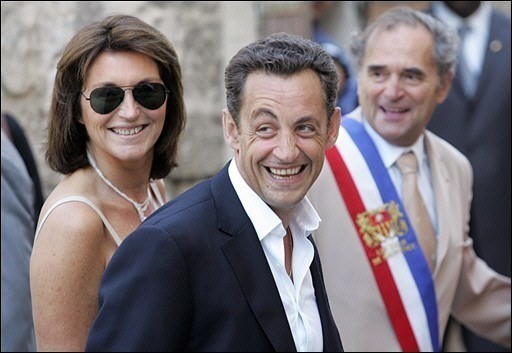 But I'm beginning to think Barack Obama is a weak president. President Obama isn't going to fight the military over Lt. Dan Choi's dismissal, despite having said "'Don't Ask, Don't Tell' makes no sense. Why would we not want able men and women, who are willing to sacrifice on our behalf, why would we tell them 'no'?" as a presidential candidate. He also reversed his decision to release more Abu Ghraib photos after General Odierno intervened and convinced him otherwise. The president declared fair trials for everyone being held at Guantanamo, but now it looks like military tribunals are back.
Barack Obama watered down his stimulus bill to get Republicans on board (which they didn't do) and, despite his real commitment to fighting global warming, his cap-and-trade proposal doesn't go as far as the Europeans have already gone. Unlike when George W. Bush was president, I agree with the White House's agenda, so I wouldn't mind seeing it shoved down a few throats. How about a little less 'uniter' and a little bit more 'decider?'
I eagerly await the outcome of his health care reforms.
Monday, May 11, 2009
LBIX, EVC, and BWP
 I'm almost finished re-balancing my portfolio. I sold my 250 shares of Freddie Mac (FRE) this morning at a 56% loss. They can't all be winners I guess. At least my Freddie losses will help reduce my capital gains taxes at year end (I'm on the hook for realized profits of $1,200 so far).
I bought 1,150 shares of a small bottling company in western Canada (mentioned in an earlier post). Last week I also bought 400 shares of a Spanish-language media company. The company is Entravision Communications (EVC) and it operates TV and radio stations all over the country (its stations are Univision and TeleFutura affiliates). I read their 10-K and listened to last quarter's conference call. I'm sold on the growth potential. Hispanics in this country are on the move and someone's gotta advertise to them. With the economy where it is advertising revenues are waaay down, but I think Entravision will survive it and rebound nicely.
I bought 25 shares of Boardwalk Pipeline Partners (BWP). It's a company that owns and operates natural gas pipelines along the Gulf Coast and up to the Midwest. It's paying a 10% dividend and I don't think they're going to need to cut it. The company just discovered that there are some mechanical problems with its pipelines and they've been running less than optimally. After the problem is fixed, they 'll boost production with minimal extra cost. Plus, natural gas is going to be an important part of any future energy policy in this country.
The $770 I have left in cash is going into a tech or a Chinese ADR. I'm leaning toward AgFeed (FEED), the largest farmer of pigs in China and a major seller of feed.
My performance since October 1st, 2008 (I'm in blue and the Dow Jones is in red):
Monday, May 04, 2009
Some Mistakes, but Overall Pretty Good
Great start to the week. Las Vegas is surging. Ford rose another 40% after I sold it. I'm up 15% overall (about $450). I'm not sure where the market is headed so I'm holding $1,400 in cash. I replaced my Ford and Tata Motors with $530 worth of Dr. Pepper Snapple (NYSE: DPS) and 1,150 shares of Leading Brands (Nasdaq: LBIX). The Dr. Pepper play is already boring me. I'm up 8% and I couldn't care less. I'm very excited about Leading Brands though. Huge growth potential. It started as a bottling/co-packing/distribution company in western Canada. They made Hansen's Monster Energy Drink a huge success in Canada, only to be dropped for Pepsi. They're trying to build their own brands now and from what I gather online, they're doing pretty well. TrueBlue, Stoked, Trek, and Infinity are a few of their brands. Anyone have any feedback on how they are? The 7-11s and grocery stores near my house don't carry them.
Five Boro Bike Tour -- 05.03.2009
 What a great weekend. Daniela and I drove out to Greenfield on Friday (May 1st) for my sister's wedding. I'll post my pictures this week. My new brother-in-law is a great guy and I want to say congratulations again to the new Melnik family. I was also able to see my dad this weekend and play with his 6-week old Golden Retriever puppies.
First of all, it rained all day long. It was only a drizzle at 7am, but it was raining by the time we got to Brooklyn at 10:30 or 11. We agreed to meet up at the last rest stop before the VN Bridge, which Dave and I thought was one stop, but everyone else thought was another. Dave and I waited for 15 minutes and assumed someone had an accident. Neither of us had a cell phone (and we didn't know anyone's number), so Dave borrowed another rider's to call his wife Kelly back in Boston. She didn't answer, so he left her a message to call Bruce or Kevin and tell them we weren't waiting any longer (at the same time, those guys called my girlfriend in Boston with the same purpose). At that point we had been standing still in the rain for 15 minutes and had lost all of our body heat. My jaw and right leg wouldn't stop shaking. We continued on and eventually met up with everyone at the finish line.
I saw at least two accidents. An older woman tried to take her bike through an enormous puddle on the highway and her bike slid out from under her. On the VN Bridge, an older looking man was lying on the shoulder with at least 10 bikers and possibly some EMTs looking after him. I was nervous about riding in such a large group because I assumed accidents were common and I don't have health insurance. I worried too much I think. I saw several kids racing who couldn't have been older than 12. I don't know if they finished the race or not, but they were doing pretty well when I passed them. Two accidents out of thousands of racers isn't bad. I would love to do the race again, but hopefully in better weather next time.

Thursday, April 23, 2009
Me Vs. The Bulls
Just this month I broke even again on my stock portfolio. I had been down as much as 53% at one point, but now I'm up somewhere between 4 and 6%. I figured the Dow Jones was unsustainable at 8,200 so I sold my only winners, Tata Motors and Ford. I've included charts of those investments because I feel like every blog post needs pictures. The chart to the right is of my Ford investment. I bought in at $1.75 on November 11th and sold just a few days ago, on the 14th of April, at $4.26. I used a logarithmic scale for my chart so it doesn't look like it, but I made a 140% profit on that decision. I felt like a genius too because in the next day or two Ford plummeted to $3.41 in intraday trading. I didn't buy back in at that price, because I'm hella greedy. The Dow Jones rose 23% in the past 5 weeks, the biggest rise in post-war history. That made me doubt whether it would last since the fundamentals of our economy haven't improved. Things just look like they're getting worse slower. Not better at all. That's why I predicted then (and still do) a big fall in the Dow. So I'm waiting. And I'm greedy.
 I also decided to sell my Tata Motors (pictured here) while it was at new heights. I bought Tata Motors on October 28th for $3.87 and sold it at $7.56. I bought Tata Motors for what I still assume will be the success of the Nano. However on the same assumptions of a bear market, I sold it. Also, most of Tata Motors' profits come from its commercial vehicle business, which has fallen apart in India and in its export markets. The Nano, wile exciting, is going to have margins so small that Tata will never make a lot of money on them. The benefit of producing the Nano is that Indian consumers will own a Tata as a first car, and hopefully they will be loyal to the brand as they trade up.
So, I'm predicting a fall. I don't know how long we have before it happens, and I don't know how bad it will be, but I think it's coming. I'm excited about Ford's long term prospects, but until GM and Chrysler (and probably a lot of their suppliers) go bankrupt, how can we think it's only up from here?
The only problem with what I'm predicting is that Ford had a great few days after I sold it. It fell to $3.41 and has since risen to $4.40 or so. It was up 12% yesterday and doesn't seem like it's coming back down. Dammit.
Wednesday, April 22, 2009
Ginger and Samm: Proud Parents
I always lose video quality when I post to YouTube, but I guess that's the cost of uploading there. This video was taken April 19th while Daniela and I were at my dad's place in Greenfield. His two purebreed Golden Retrievers had 5 puppies and we got to play with them! They were 4 weeks old when this video was shot.
Friday, April 17, 2009
Sweden: Not hip
 The Stockholm District Court has found the four guys behind the The Pirate Bay guilty! A Google search will get you millions of articles on this, but here's the BBC's take. More importantly, here is the response from Peter Sunde.
This isn't the final ruling. There are courts of appeal and even the Supreme Court of Sweden (if it were to accept the case). The guilty verdict has been handed down by a district court and The Pirate Bay guys are already appealing.
The four guys were fined 30 million kronor ($3.5 million) in damages, and a year in jail each! In response to the fines, spokesperson Peter Sunde said:
"Even if I had money, I would rather burn everything [I] own and give them the ashes… Not even the ashes, actually. I’d allow them to pick the ashes up and give ‘em to someone else."I think this quote is rockin', but it belies how quiet and reasonable they seem. These aren't anarchists or anything. They're entrepreneurs.
Chairman of the International Federation of the Phonographic Industry (IFPI), John Kennedy, said of the rulings:
"These guys weren't making a principled stand, they were out to line their own pockets. There was nothing meritorious about their behaviour, it was reprehensible.Making money is reprehensible to a guy who represents the music industry? Moving on...
For anyone who doesn't download things online, The Pirate Bay is a BitTorrent tracking website. It performs the exact same function as Google, but it tracks BitTorrents, not web pages. A BitTorrent is any file, broadcast to the internet, for anyone who wants it. And people want burned copies of Monsters Vs. Aliens and Lupe Fiasco albums. The difference between Napster and The Pirate Bay is that Napster actually hosted the files. When you downloaded a movie, you were downloading it from Napster. The Pirate Bay is only a seach engine. If you tore apart their servers, you wouldn't find any of the copyrighted material that they are accused of "facilitating." BitTorrent technology is the difference between the two sites.
So, while this is very interesting for Sweden's system of justice, in reality, who cares? In a world where The Pirate Bay could only be hosted in Sweden, this decision might matter. In fact, of the 4 guys found guilty, only Sunde still lives there. Let's say somehow this court case gets all the way to the Supreme Court and they lose. After their jail time and fines, these guys will be able to just pack up their computers and go to some other country where they can get away with it. If the Swedish courts uphold this ruling, they're going to create a hostile environment for internet business and they could potentially chase all of Sweden's e-trenpreneurs out of the country. And what will it have accomplished? Sweden can try to block sites it finds objectionable, but anyone who really wants to find copyrighted material online can find it easily enough. Plus blocking sites violates the very spirit of the internet.
In his video response, Peter Sunde says someone should sue Google. You can find all of the BitTorrents that are available on The Pirate Bay through Google, it's just more difficult. So why not sue Google? I don't think it would be a good idea, but why not?
Wednesday, April 15, 2009
Red Sox Galaxy
NASA astronaut Sunita Williams appeared on The Colbert Report last night to tell Stephen that NASA isn't naming its new node after him. Did anyone else notice the T-shirt she was wearing to deliver the bad news? Red Sox Nation has made it into space!
Sunday, April 12, 2009
Tax Day Teabaggers
First a little history:
So what exactly are the 500 planned "Tax Day Tea Parties" all about? Surely the British aren't trying to tax us again. According to taxdayteaparty.com:
... We believe the government is far too big already. Yes, this includes the previous administrations excess spending and the idea of bailouts to banks. The plans of the current administration are to make it even bigger. We resent the intrusion and control of government into our lives and liberties. This is a key factor prompting protests.and from the site specific to Boston:
The “stimulus” bill and TARP subsidise some favoured companies, banks, and people at the expense of those that the government does not take as kindly to. Any company whose cost of doing business decreases is given an advantage over its competitors, not on the basis of excellence or ingenuity, but on the basis of favourable government treatment - bought and paid for by its competitors and the American people. Less costly and more ingenious ideas, rather than pushing the American economy forward, will be sidelined as the government artificially lowers the cost and increases the resources given to more expensive and less effective business models, inventions, and ideas.I think these statements could read "we're freaking out about all of this spending. It's too complicated and we don't understand it. Bankers make millions and they caused this whole fucking problem. All of this is unfair." That's my interpretation, because these statements don't actually make a whole lot of sense. Bailing out the banks is an attempt to control our lives and liberty? The Stimulus Act shows favoritism? Of course it does. To the squeakiest wheels. And the government has intervened in markets since there have been markets. Why is it suddenly not OK to do that?
But, motive aside, what are these protesters actually going to do? Nothing as far as I can tell. They're going to assemble near the capital buildings in each state, wave some home made signs, and listen to speeches. There's no real agenda so there can't be a strategy. I think I'm going to head over to Boston Common on Wednesday to see this circle jerk, but I expect to see a lot of nothing going on.
Friday, April 10, 2009
Ninja, Survivalist, Investor.
 I just wanted to brag a little bit: my portfolio is making money again! For those of you who don't own stocks or aren't following your 401ks anymore, we just had an awesome 5 weeks. I read somewhere that these are the biggest gains since the Great Depression. I have no idea if that's true or not; I've cleaned up regardless.
I picked 4 losers and 2 winners. Bank of America, MGM Mirage, and Freddie Mac are still down 60% from where I bought them back in October. US Steel is down 24%. Ford and Tata Motors are up 140% and 100% respectively. How does that make sense? Ford has been in good shape relative to GM and Chrysler, but it's not doing well. I bought Tata for what I assume will be the success of the Nano. But before either of those companies can get their acts together, finance and materials have to recover, right? A US Steel recovery should precede an automotive recovery... I think the reason that I've done well is that I just got lucky with my timing. And it's also the reason I was burned by everything else. I bought in way too early. Lesson learned. Again.
Thursday, April 09, 2009
The Inheritance by David Sanger

My advice is to skip the chapter on China. Read In China's Shadow by Reed Hundt if you want to understand China's challenge to American business. If you want a political assessment, try China Rising by David Kang. Just know that China has learned a lot watching our poor performance in Afghanistan and Iraq. And China is both a competitor and a partner in the world. It's important to remember it's both.
North Korea is a problem because it's selling its nuclear technology and equipment to whoever wants it. That thing that Israel blew up in Syria in 2007 was a nuclear reactor, identical to the one at Yongbyon. Bill Clinton didn't have much success with the Agreed Framework of 1994, but at least he got the North Koreans to stop production at Yongbyon. George W. Bush had even less success (although the North Koreans blew up the smokestack at Yongbyon in 2007 -- probably because it was a rusted-out piece of crap by then and may not have been operational since 2003).
Iran is a problem not because it will launch a warhead at Israel, but because it's going to trigger an arms race in the Middle East. If Iran gets the bomb, or gets close enough to make one, its Sunni enemies in the Middle East, Egypt and Saudi Arabia, are going to want one too. I don't know what that will mean for the Middle East, but everyone seems to agree that a Middle East in which Israel, Iran, Saudi Arabia, and Egypt are nuclear-armed is a bad thing.
We are losing the war in Afghanistan but Barack Obama has recently committed more troops. That's a good start, but according to a general in Afghanistan, winning will take 50 years. I wonder if most Americans can get behind an effort like that? And if anyone missed it, we have accomplished precisely nothing in Afghanistan. The problem has just shifted over the border into Pakistan.
The last thing that I want to comment on is our vulnerability to nuclear, biological and cyber attacks. Representatives from the government and private industry got together and created a likely scenario in the event of a massive cyber attack. Our energy grid would be wiped out, no communications, etc; Terrifying. I was thinking about how I would keep Daniela and myself alive in the event of a catastrophic event like that. I know that the first step is to fill up the bathtub and sinks with water while it's still running. But after all the food in the fridge spoils, what then? I thought I should know how to salt meat (that's how colonial Americans did it, right?) so I read about it for hours yesterday online. I think I might try it and see if I can get it to work. I did find a lot of blog postings by people 
Is it insane that I thought about that?
David Sanger on The Daily Show
| The Daily Show With Jon Stewart | M - Th 11p / 10c | |||
| David Sanger | ||||
| ||||
Originally aired on January 21, 2009
Monday, April 06, 2009
A Heroin Junkie on Government
"We have a new type of rule now.
Not one-man rule, or rule of aristocracy or plutocracy, but of small groups elevated to positions of absolute power by random pressures and subject to political and economic factors that leave little room for decision.
They are representatives of abstract forces who have reached power through surrender of self. The iron-willed dictator is a thing of past.
There will be no more Stalins, no more Hitlers.
The rulers of this most insecure of all worlds are rulers by accident. Inept, frightened pilots at the controls of a vast machine they cannot understand, calling in experts to tell them which buttons to push."
Williams Burroughs in Dead City Radio, 1990
Tuesday, March 31, 2009
Fixing Global Finance by Martin Wolf
 Martin Wolf is an associate editor and economics commentator for the Financial Times and a professor at the University of Nottingham. Fixing Global Finance began as a series of lectures delivered in 2006 at the Paul H. Nitze School of Advanced International Studies. It was published in 2008 but I think the majority of it was written when the stock market was at its 2007 peak. The ideas aren't new -- all of the important points can be found in Ben Bernanke's speeches and writings since 2005 -- but there's a lot of illuminating data and it's an interesting read. What follows is more of a summary than a review.
The subjects of Mr. Wolf's book are the global financial imbalances. America's $800 billion Current Account deficit and emerging economies' giant surpluses are not accidental. They are the result of export-led growth strategies in the developing world and currency market interventions. That America has been on the receiving end of these policies is due to its position as the global borrower of last resort.
The housing market collapse in the United States and the global recession are the results of these global financial imbalances. Martin Wolf has published this book at an appropriate time because some people still seem confused by what happened. President da Silva of Brazil recently blamed "white people with blue eyes" for the global crunch, and China has been pointing its finger at the US. The Chinese explanation is that greedy, stupid Americans who forgot how to save money are consuming all of the world's wealth by buying mansions and BMWs. The US is jeopardizing global stability, and 50 of its investment bankers ruined the world's economy (the only problem with blaming US consumption is that if it was "crowding out" foreign savings, we should see high real interest rates abroad. In fact we see very low real interest rates globally -- China is "crowding in" US consumption, not the other way around).
But those things were not the causes of the housing market collapse and they didn't ruin the global economy. Instead, it was the developing nations' Current Account surpluses that caused the collapse.
Think about this logically. I know that stories about liar loans are easy to understand and make sense, but picture this from China's point of view. China, as we all know, is the fastest growing country in the world. Why would China be sending its money to the US? Is the US a better investment opportunity than China? Of course not. When a nation has the investment opportunities that China has, it should be importing capital as fast as it can to grow. This isn't happening. Something is definitely wrong.
I'm not singling China out of the group; China's case can help us understand what's been going on. China has been running increasingly massive Current Account surpluses since the late 1990s. The world loves tainted milk and poisonous toys, so China exports them in bulk. Normally, when one nation runs such a large surplus, foreign investors buy the local currency and drive up the exchange rate. This makes the local goods less competitive and the surplus shrinks. The developing world has been preventing this from happening. China, Japan, developing Asia, oil-exporting nations, and the C.I.S. countries have been intervening in currency markets to keep their currencies low relative to the Dollar (this is the currency manipulation that politicians on Capitol Hill are constantly bitching about -- although they seem to single out China, who is only part of the problem). So, 
 How does this affect the US? This is the "global savings glut" that we keep hearing about. An artificially strong US Dollar hurts domestic manufacturing (we had the lowest Current Account deficit in the 4th Quarter of 2008 since 2003 thanks to a falling Dollar). This would result in high unemployment, but the Federal Reserve under President Bush pursued an expansionary monetary policy (interest rates fell to 1%) to create excess demand. This is what is meant by calling the US the "borrower of last resort." This excess demand consumes the surplus coming from Asia. If the Federal Reserve hadn't pursued this policy, it would have stalled the manufacturing sector in Asia and reduced the surpluses. We weren't being malevolent -- it would have also caused higher unemployment in the US. This policy of inflating consumer demand helped create the housing bubble and shrank our savings rate (does anyone want to keep their money in a Bank of America savings account paying 0.20% interest?). I emailed the author of the book, Martin Wolf, and he told me as much. The policies in the developing world are directly related to the housing market bubble in this country.
So what do we do? Well, the worst has already happened. A massive global recession is what intelligent policies may have been able to avoid. But what do we do going forward? If we are to sustain Asia's levels of production, demand there must be primed. It is unlikely that investment can go much higher (it is currently 40%, where investment in the US is 20% of GDP) so domestic consumption and government spending must make up the difference. If China had social safety nets and allowed its citizens to invest abroad, maybe as a nation it wouldn't save 59% of its GDP every year. In his book, Martin Wolf questions whether we need such a liberalized financial system in the first place. Everyone assumes that money should move around the world like free trade, but they're not the same and maybe shouldn't be treated as such.
Subscribe to:
Posts (Atom)
